Signing a contract with a commercial cleaning company is not a decision to rush. For facilities managers and office managers, a cleaning contract is a long-term commitment that affects the daily experience of every person who walks through your doors — from staff and clients to visitors and senior stakeholders.
Get it right, and you have a reliable, professional service that runs in the background without you ever having to think about it. Get it wrong, and you’re locked into an agreement that underdelivers, is difficult to challenge, and even harder to exit.
This guide covers everything you should check before signing an office cleaning contract — so you can go in with confidence and hold your provider to account from day one.
Why the Contract Matters More Than the Quote
It is easy to focus on price when comparing cleaning providers. Price is visible, comparable, and straightforward to understand. But the contract is where the real detail lives — and it is the contract, not the quote, that governs what you actually receive.
A cleaning quote tells you what a company is offering. The contract tells you what they are committing to, what happens when things go wrong, and what your options are if the service doesn’t meet the standard promised. These are very different things, and the gap between them is where most cleaning disputes begin.
Before you sign anything, make sure you have read — and understood — the full contract document. If anything is unclear, ask for clarification in writing.
Scope of Works — What Is Actually Included
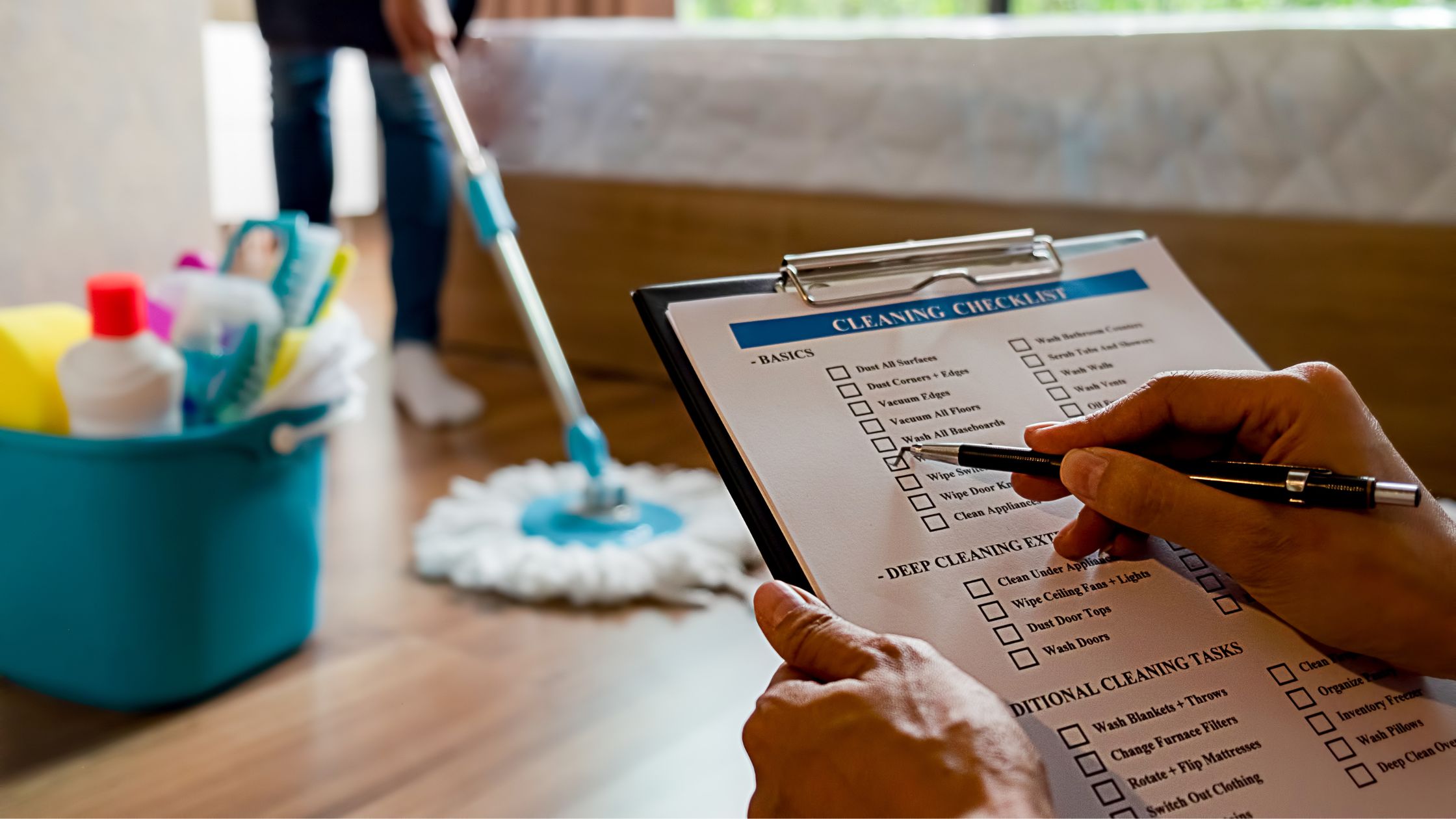
The most important section of any office cleaning contract is the scope of works. This is the detailed breakdown of exactly what will be cleaned, how often, and to what standard. A well-written scope of works leaves no room for ambiguity.
Look for the following:
- A room-by-room or area-by-area breakdown of cleaning tasks
- Frequency of each task — daily, weekly, monthly, or periodic
- Specific mention of high-touch areas such as door handles, light switches, lift buttons, and shared equipment
- Whether kitchen and welfare areas are included and to what level
- Whether consumables such as hand soap, paper towels, and bin liners are supplied or charged separately
- Whether window cleaning, carpet cleaning, or specialist treatments are included or treated as additional services
If the scope of works is vague — for example, referring only to “general office cleaning” without further detail — push back and ask for a more specific breakdown before signing. Vague language in a contract almost always works in the provider’s favour, not yours.
Service Frequency and Scheduling
How often will your office be cleaned, and when? This sounds straightforward, but the scheduling detail in a contract can vary significantly between providers.
Check whether the contract specifies the days and times of cleaning visits, how the schedule is communicated and confirmed, whether there is flexibility to adjust frequency if your requirements change, and how the provider handles cleaning visits around public holidays or office closures.
For many businesses, out-of-hours cleaning — carried out in the early morning or evening — is preferable to minimise disruption. Confirm whether this is included as standard or carries an additional charge.
Quality Standards and Performance Monitoring
A professional office cleaning contract should include clear quality standards and a mechanism for monitoring performance against them. Without this, there is no objective basis for raising concerns or requesting remedial action.
Look for reference to a cleaning specification or service level agreement (SLA) within the contract, a process for reporting issues or requesting additional cleans, scheduled quality audits or inspections — and who carries them out, and a clear escalation process if the standard of cleaning falls below what was agreed.
Some providers will include key performance indicators (KPIs) within the contract, which provide a measurable framework for assessing performance over time. This is particularly useful for larger offices or multi-site operations where consistency is critical.
To find out more about how Hashtag Clean manages quality and service delivery for office clients, visit our Office Cleaning Service Page.
Staff Vetting and Training
The people carrying out your office clean will have access to your premises — often outside of normal working hours. Knowing that cleaning operatives are properly vetted and trained is not a nice-to-have; it is a fundamental requirement.
Your contract should confirm that all cleaning staff undergo a DBS (Disclosure and Barring Service) check or equivalent background screening, staff are trained in health and safety, COSHH (Control of Substances Hazardous to Health), and correct cleaning techniques, there is a named supervisor or account manager responsible for your contract, and the provider has a clear process for managing staff absences to ensure continuity of service.
Do not assume these things are in place — ask for confirmation in writing and ensure they are referenced in the contract document.
For guidance on COSHH regulations and employer responsibilities, the Health and Safety Executive provides detailed information for businesses: HSE — COSHH Guidance
Insurance and Liability
Any reputable commercial cleaning company should hold adequate public liability insurance. This protects your business in the event of damage to property or injury caused by the cleaning team whilst on your premises.
Before signing, confirm the level of public liability cover held — a minimum of £5 million is standard for commercial cleaning contracts, that the provider holds employers’ liability insurance as required by law, and that the contract clearly sets out liability in the event of damage or loss.
Ask to see a copy of the provider’s insurance certificates before work commences. A credible company will have no hesitation in providing these.
For further guidance on employer and public liability insurance requirements, the Association of British Insurers provides clear guidance for businesses: Association of British Insurers — Business Insurance Guidance
Contract Length and Exit Clauses
One of the most overlooked areas of a cleaning contract is the exit clause. How long is the initial term? What notice is required to terminate? What happens if the service consistently underperforms?
Look for the initial contract term — typically three, six, or twelve months for office cleaning agreements, the notice period required by both parties to terminate the contract, whether there is a break clause that allows early termination in the event of repeated poor performance, and what the process is for raising a formal complaint and escalating unresolved issues.
A contract that locks you in for twelve months with no break clause and a lengthy notice period is a significant commercial risk if the service doesn’t perform. Push for reasonable exit terms before you sign.
For guidance on commercial contract rights and dispute resolution, the Chartered Institute of Procurement and Supply (CIPS) provides useful resources for procurement and facilities professionals: CIPS — Contract Management Guidance
Sustainability and Environmental Considerations
Increasingly, businesses are paying attention to the environmental credentials of their service providers — and rightly so. If sustainability is important to your organisation, your cleaning contract should reflect this.
Look for whether the provider uses environmentally accredited cleaning products, whether they operate a colour-coded cleaning system to reduce cross-contamination and product waste, whether they have a waste reduction or recycling policy, and whether they can provide evidence of any environmental accreditations or memberships.
This is particularly relevant for businesses working towards ISO 14001 certification or with corporate social responsibility (CSR) commitments that extend to their supply chain.
For further information on environmental standards in facilities management, the British Institute of Cleaning Science (BICSc) provides guidance and accreditation for cleaning professionals: BICSc — Cleaning Industry Standards and Accreditation
Frequently Asked Questions
What should an office cleaning contract include? A well-structured office cleaning contract should include a detailed scope of works, cleaning frequency and scheduling, quality standards and performance monitoring processes, staff vetting and training requirements, insurance details, contract length, notice periods, and exit clauses. The more specific the contract, the easier it is to hold your provider to account.
How long should an office cleaning contract be? Contract lengths vary, but most office cleaning agreements run for an initial term of six to twelve months. Shorter initial terms — with the option to extend — are preferable if you are working with a new provider for the first time, as they allow you to assess performance before committing long-term.
Can I change the cleaning frequency during the contract? This depends on the terms of your specific contract. Many providers will accommodate changes to frequency, but this should be explicitly covered in the contract document. Confirm the process for requesting schedule changes — and whether they carry any additional cost — before signing.
What happens if the cleaning standard falls below what was agreed? Your contract should include a clear process for raising concerns and requesting remedial action. If the issue is not resolved, the escalation process and any break clauses within the contract become relevant. Always document concerns in writing and keep a record of communication with your provider.
Do I need a separate contract for specialist cleaning such as carpet or window cleaning? In most cases, yes. Specialist treatments such as carpet cleaning, external window cleaning, or deep kitchen cleans are typically treated as separate services and quoted individually. Confirm what is and is not included in your standard contract before signing to avoid unexpected costs later.
Looking for an Office Cleaning Contract You Can Trust? Let’s Talk.
At Hashtag Clean, we believe a cleaning contract should give you confidence — not cause you concern. We work with offices, facilities managers, and commercial clients across Surrey, Sussex, and Kent, providing transparent contracts, consistent service, and a team that takes quality seriously.
Find out more about our Office Cleaning Services or get in touch with the team today.
✆ 01444 810670 ✉ mail@hashtagclean.co.uk
A cleaning contract should work for you — and we’ll make sure it does.