They sound like they mean the same thing. In everyday conversation, sanitising and disinfecting are often used interchangeably — but in a professional cleaning context, they are not the same, and the distinction matters more than most business owners realise.
If your cleaning contractor cannot clearly explain the difference between sanitisation and disinfection — and when each is appropriate — that is worth paying attention to. This guide breaks down what each process actually involves, when each should be used, and what questions to ask your cleaning provider to ensure your premises are being treated to the right standard.
What Does Sanitisation Mean?
Sanitisation is the process of reducing the number of bacteria and microorganisms on a surface to a level that is considered safe — typically in line with public health standards. It does not necessarily eliminate all bacteria or viruses, but it reduces their presence to a level that poses a low risk of harm in most environments.
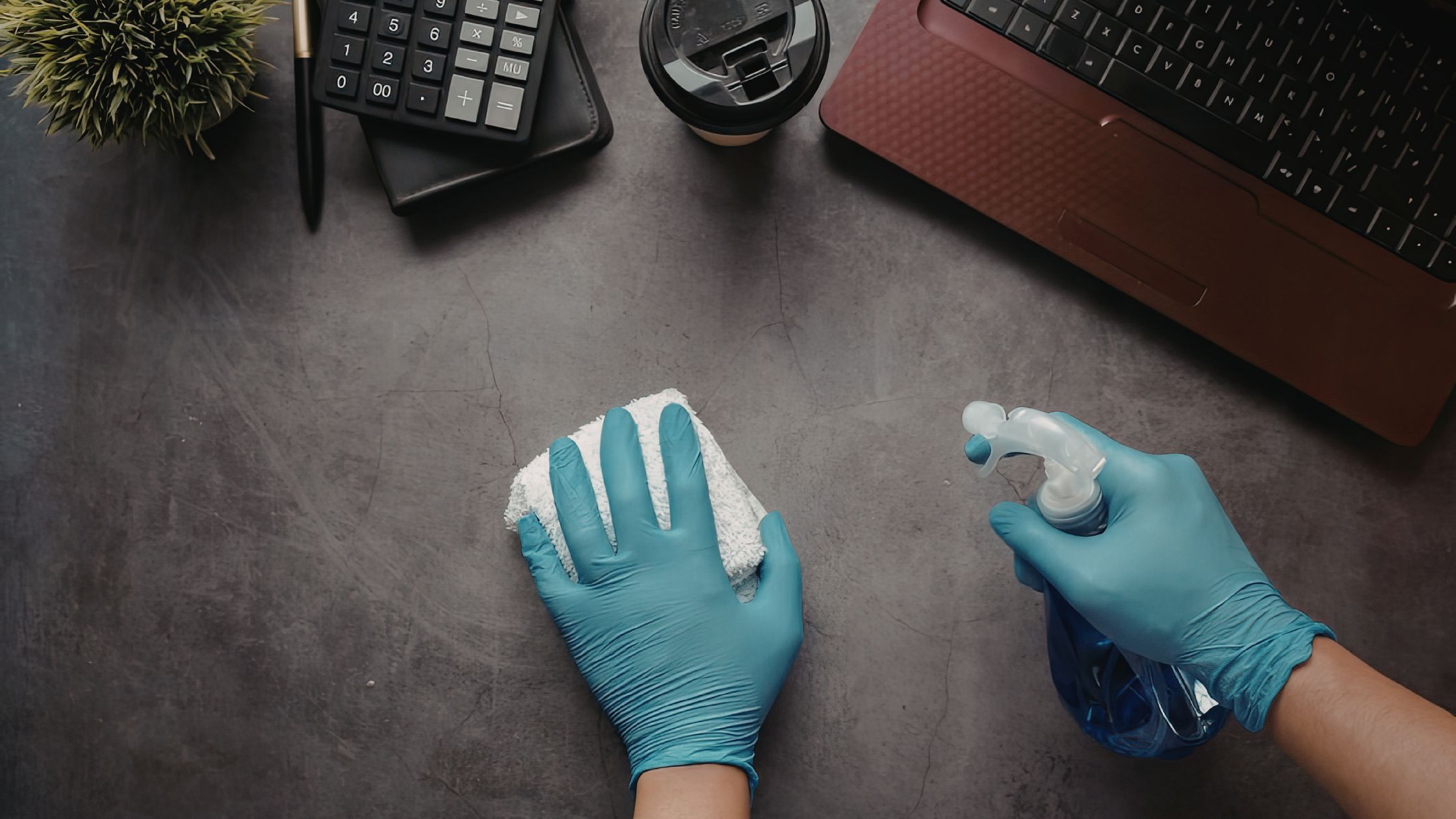
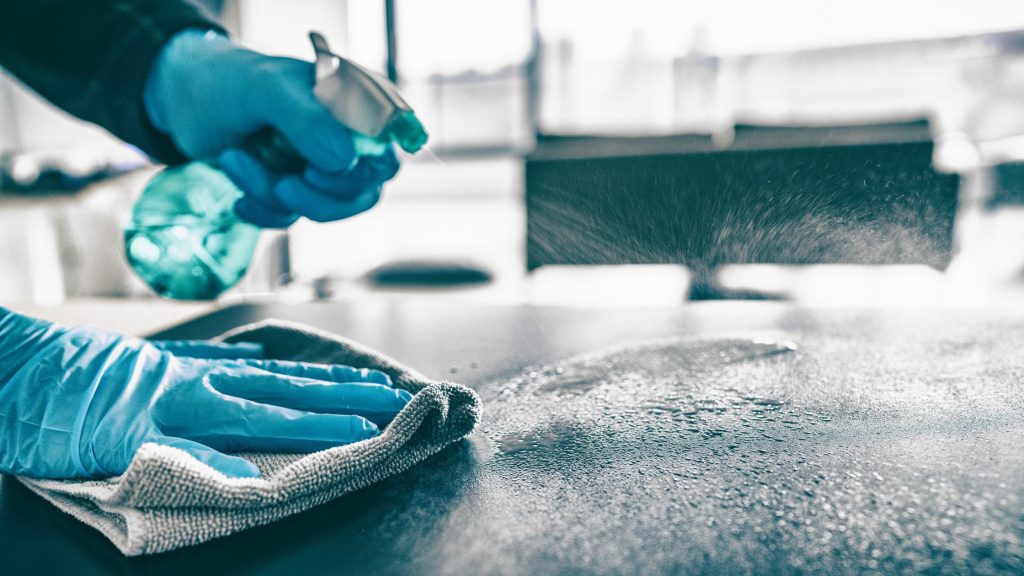
Sanitising is typically achieved using sanitising sprays, wipes, or solutions applied to surfaces after they have been cleaned. It is a standard step in the routine cleaning of offices, hospitality environments, and customer-facing spaces — particularly on surfaces that come into regular contact with food or hands.
It is worth noting that sanitisation is most effective on surfaces that have already been physically cleaned. Applying a sanitiser to a visibly dirty surface significantly reduces its effectiveness, as organic matter — grease, dust, and debris — can shield microorganisms from the sanitising agent.
What Does Disinfection Mean?
Disinfection goes further. A disinfectant is designed to destroy or irreversibly inactivate a much broader and more resistant range of microorganisms — including bacteria, viruses, and fungi — on surfaces and objects. Disinfectants are typically stronger than sanitisers and are used in environments where the risk of infection transmission is higher.
In a commercial context, disinfection is the appropriate standard for healthcare settings, food production facilities, areas where bodily fluids may be present, and any environment where a higher level of pathogen control is required. It is also the standard applied to high-touch surfaces during and after periods of increased infection risk — such as during a norovirus outbreak or following a confirmed case of illness in the workplace.
Disinfectants must be used at the correct concentration and left on the surface for the correct contact time to be effective. A product applied and immediately wiped away may not achieve the level of disinfection stated on the label — a detail that professional cleaning operatives should be trained to understand.
For detailed guidance on the difference between cleaning, sanitising, and disinfecting in commercial environments, the UK Health Security Agency (UKHSA) provides comprehensive resources for businesses and facilities managers: UKHSA — Guidance on Cleaning and Disinfection
Cleaning, Sanitising, and Disinfecting — Understanding the Full Process
To understand where sanitisation and disinfection fit, it helps to see them as part of a three-stage process rather than standalone tasks:
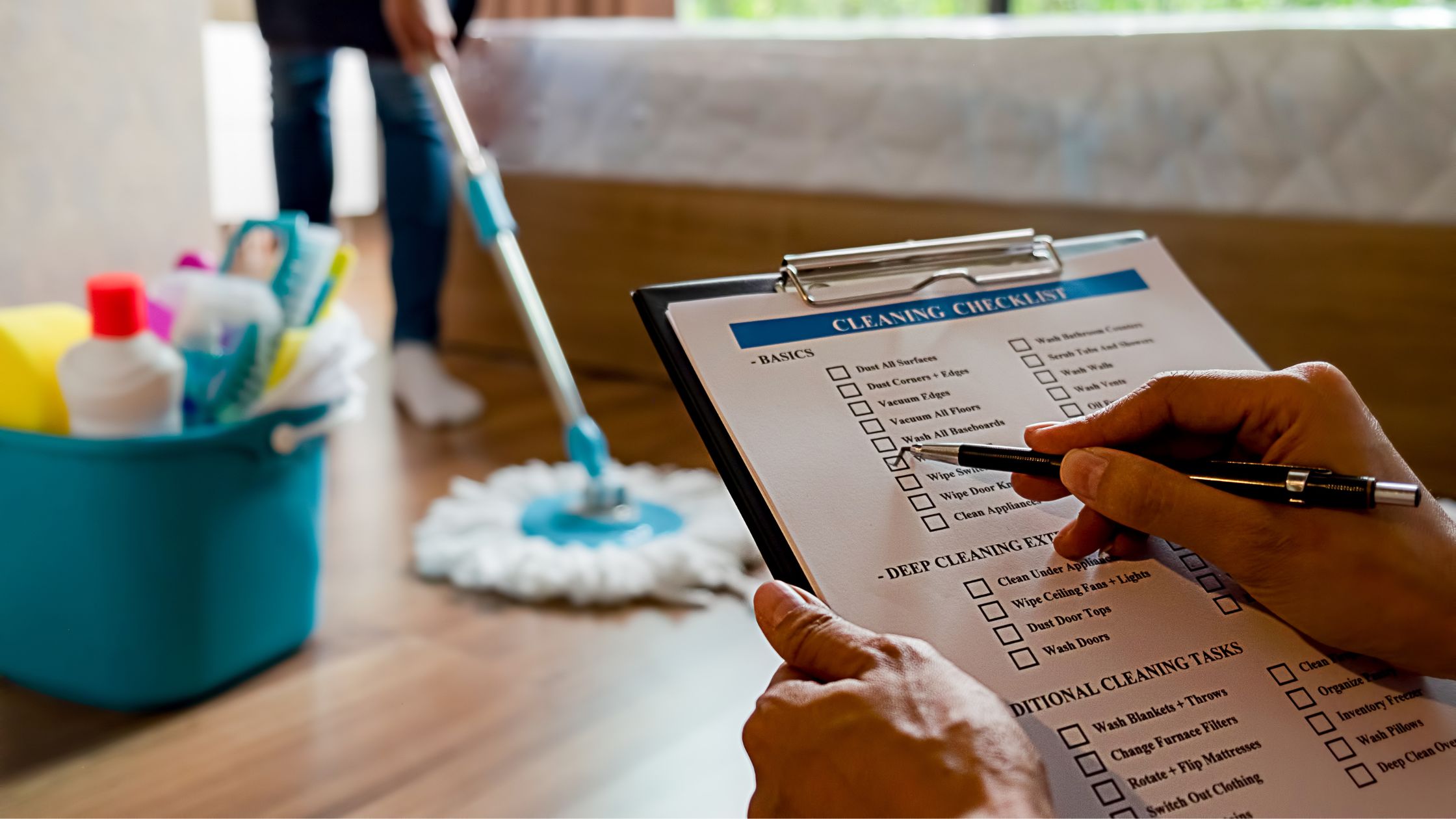
Stage 1 — Cleaning Physical removal of dirt, dust, grease, and debris from surfaces using detergent and water. Cleaning does not kill pathogens, but it removes the organic matter that would otherwise reduce the effectiveness of sanitisers and disinfectants applied in subsequent stages.
Stage 2 — Sanitising Reduction of bacteria and microorganisms on a cleaned surface to a safe level. Appropriate for general commercial environments, food contact surfaces, and routine maintenance of high-touch areas.
Stage 3 — Disinfecting Destruction or inactivation of a broader range of pathogens on a cleaned surface. Appropriate for healthcare settings, food production environments, and any situation where a higher standard of pathogen control is required.
In many commercial settings, routine cleaning followed by sanitisation is sufficient for day-to-day hygiene maintenance. Disinfection is applied in higher-risk areas or situations — and a professional cleaning company should know the difference and apply each process appropriately.
When Is Each Appropriate for Your Premises?
The right approach depends on the nature of your premises and the activities carried out within them.
Sanitisation is typically appropriate for:
- General office environments and co-working spaces
- Customer-facing reception and waiting areas
- Retail and hospitality environments
- Routine maintenance of high-touch surfaces such as door handles, lift buttons, and shared equipment
Disinfection is typically appropriate for:
- Healthcare settings including GP surgeries, dental practices, and clinics
- Food preparation and production areas
- Nurseries, schools, and childcare facilities
- Any area where bodily fluids may be present
- Outbreak management — for example, following a confirmed case of norovirus or influenza in the workplace
It is also worth noting that some environments require a combination of both — routine sanitisation as part of daily cleaning, with periodic or targeted disinfection of higher-risk areas.
To find out more about how Hashtag Clean tailors cleaning standards to different commercial environments, visit our Commercial Cleaning Service Page.
The EN Standards — What They Mean for Your Cleaning Contractor
When evaluating cleaning products and the companies that use them, you may encounter references to EN standards — European Norm testing standards that define the effectiveness of disinfectants and sanitisers against specific pathogens.
The most relevant for commercial cleaning are EN 1276 (bactericidal activity), EN 13697 (surface disinfection), and EN 14476 (virucidal activity). Products that carry these certifications have been independently tested and proven to achieve the stated level of pathogen reduction under defined conditions.
A professional commercial cleaning company should be able to confirm that the products they use carry the appropriate EN certifications for the environments in which they are applied. If your contractor cannot tell you what standards their products meet, that is worth following up.
For further information on cleaning product standards and certifications in the UK, the British Institute of Cleaning Science (BICSc) provides guidance on professional cleaning standards and best practice: BICSc — Professional Cleaning Standards
Questions to Ask Your Cleaning Contractor
If you want to ensure your cleaning provider is applying the right processes to the right areas of your premises, here are the questions worth asking:
- Do you distinguish between sanitisation and disinfection in your cleaning processes, and how?
- What products do you use for disinfection, and what EN standards do they meet?
- Are your operatives trained in correct contact times and dilution ratios for disinfectants?
- How do you determine which areas of our premises require disinfection rather than standard sanitisation?
- Can you provide a cleaning specification that clearly sets out what processes are applied to each area?
A reputable cleaning company should be able to answer all of these questions clearly and confidently. If the answers are vague, it may be worth reviewing whether your current provider is delivering the standard your premises requires.
To find out more about Hashtag Clean’s approach to hygiene standards across commercial and specialist cleaning, visit our Specialist Cleaning Services Page.
For further guidance on infection prevention and control in workplace settings, the Chartered Institute of Environmental Health provides resources for businesses on maintaining healthy premises: CIEH — Environmental Health and Business Guidance
Frequently Asked Questions
What is the difference between sanitising and disinfecting? Sanitising reduces the number of bacteria and microorganisms on a surface to a safe level. Disinfecting goes further, destroying or inactivating a broader range of pathogens including viruses and fungi. Both are distinct from cleaning, which removes physical dirt and debris but does not kill pathogens.
Do I need disinfection in a standard office environment? For most offices, routine cleaning followed by sanitisation of high-touch surfaces is sufficient for day-to-day hygiene. Disinfection may be appropriate following a confirmed illness in the workplace, or in areas such as staff toilets and kitchens where hygiene standards need to be higher.
How do I know if my cleaning contractor is using the right products? Ask your contractor to confirm the EN certifications of the products they use and whether they are appropriate for the environments in which they are applied. A professional provider should be transparent about the products and processes they use and able to evidence their effectiveness.
What are EN standards and why do they matter? EN standards are European Norm testing standards that define the effectiveness of disinfectants and sanitisers against specific pathogens. Products carrying these certifications have been independently tested and proven to achieve the stated level of pathogen reduction. They provide an objective measure of whether a cleaning product is fit for purpose in a given environment.
Want a Cleaning Partner Who Knows the Difference? Get in Touch.
At Hashtag Clean, our teams are trained to apply the right cleaning, sanitising, and disinfection processes to the right areas — across offices, healthcare settings, commercial premises, and specialist environments throughout Surrey, Sussex, and Kent.
If you want a cleaning contractor who understands hygiene at a professional level, we’d love to talk.
Get in touch with the Hashtag Clean team today:
✆ 01444 810670 ✉ mail@hashtagclean.co.uk
The right cleaning standard for the right environment — that’s the Hashtag Clean difference.