Office Cleaning Checklist – 12 Areas You Must Keep Clean
Offices are high-risk health hazards, even the smartest and tidiest ones. They often harbour a scary amount of bacteria, viruses and other germs. To keep your office infection-free you need regular, methodical cleaning of germ-friendly hotspots. It’s no surprise that the areas which are most frequently touched by human hands are most at risk. And it’s not just the most likely suspects that need attention.
Welcome to Hashtag Clean’s Bacteria-Alert Checklist!
Alert#1 – Desks
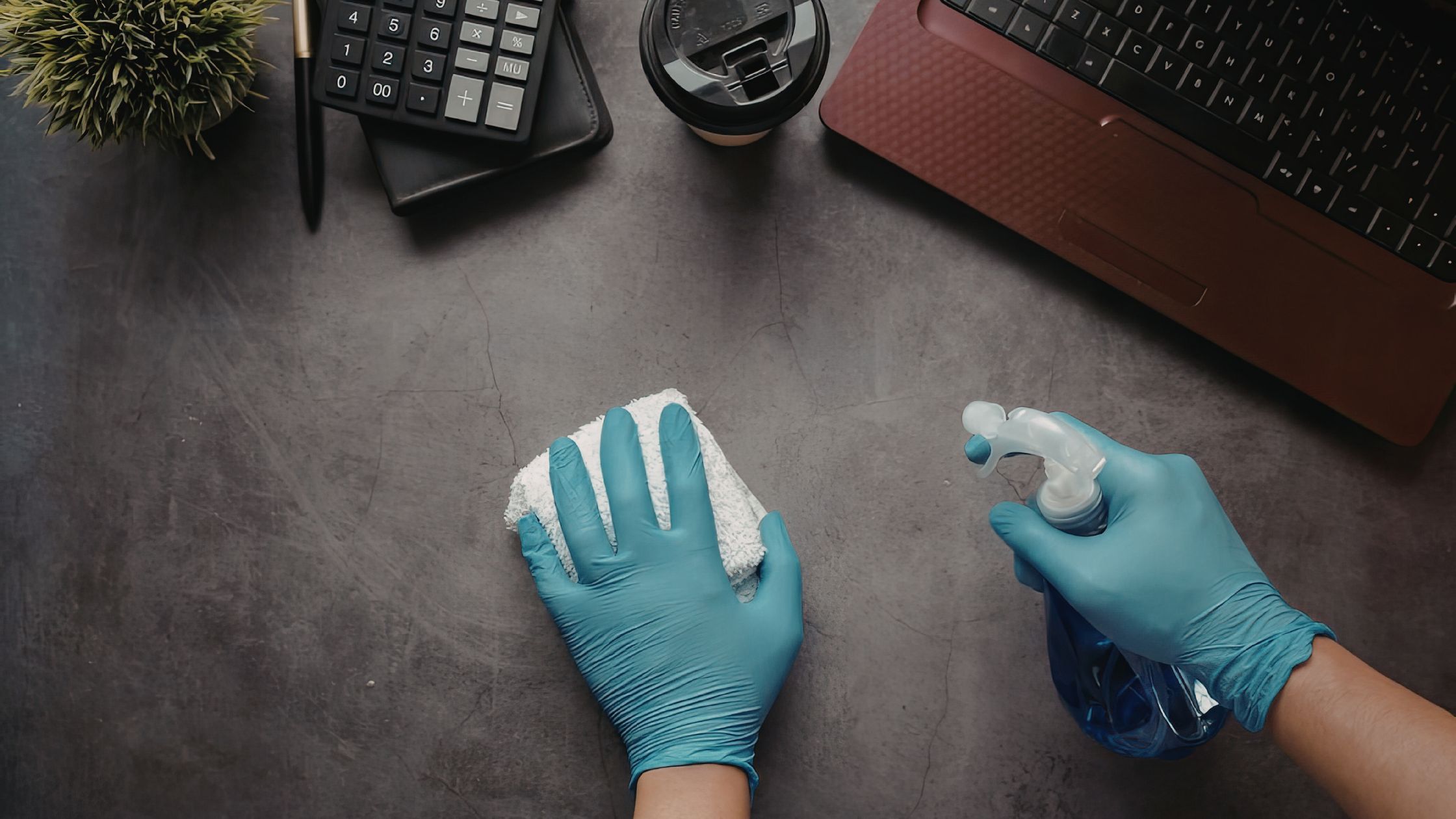
Let’s start with the desk. Think about how many times a day a humble office desk is in contact with people. It gets touched by resting hands and brushed against by passers-by. It’s in the firing line any time papers are shuffled around or even when a pen gets picked up. It’s where any number of office lunches or snacks are consumed. In fact, detailed research has shown that the average office desk carries 400 times the number of germs on a toilet seat. Offices which operate hot-desking are even more at risk, with multiple users making the odds of spreading infectious organisms even more likely.
Alert #2 – Phones
Many of us use mobiles but like desk phones they need to be germ-free. The highest risks come with phones used by more than one person. The danger isn’t only from germs transmitted by hand – when you speak into a phone any germs on your breath will be shared with the next user.
Alert #3 – Keyboards and Mouse
It’s almost as if keyboards are designed to attract and retain dirt, crumbs, dead skin – and of course every kind of bacteria going. That’s the problem with any equipment with tiny crevices for germs to hide away in. What’s more, keyboards get a lot of use during the working day with busy fingers constantly transferring all of the hazards on them. The same is true of a computer mouse as well.
Alert#4 – Pens and Markers
Pens tend to lie around desks or in desk-tidy pots and baskets. They are often shared by lots of people, they get dropped on the floor and rarely receive the attention of anyone minded to clean them. Even worse, one in five office workers admit to chewing their pens. Little wonder that they’re in the dock as carriers of office bugs.
Alert #5 – Mugs, glasses and water bottles
It’s a well-known fact that a modern office of any size cannot function properly without a regular supply of lattes, americanos or plain builders’ tea. That’s fine as long as cups and mugs are properly washed at the end of the working day and, preferably, kept in a cupboard or desk drawer. It’s best if each member of staff takes responsibility for their own mug, rather than sharing them. The same is true of glasses and water bottles. Just as in the home, a dishwasher is the best way to keep drinking vessels clean and hygienic.
Alert #6 – Plates and cutlery
Some two-thirds of office staff eat ‘al desko’, either for breakfast, lunch or both. Those that do frequently rely on office crockery and cutlery. Experts agree that there’s a risk to mental health by not taking a break from sitting down in front of screen, and that there’s an infection risk too. Cleanliness is a major concern as well as sharing plates, knives, forks and, of course, tea spoons. Once again, a dishwater is the hygienic solution.
Alert #7 – Teapots and cafetieres
Hot drinks feature in every office and while many are prepared in individual mugs, teapots and cafetieres are used in many workplaces. Just like cups and mugs they need a thorough wash after use, especially since they have all the hygiene risks that come with being handled by many different people.
Alert #8 – Water dispensers and coffee machines
Once again the enemy is not so much the machines themselves but the fact that many members of staff are likely to use them. Keeping office drink machines clean is an important part of maintaining good health among the workforce.
Alert #9 – Photocopiers
Every photocopier needs a hygienic wipe down to remove bacteria and other germs which may be left behind by users. It is estimated that photocopiers are touched 300 times a day. That’s 300 opportunities for germs to spread on buttons, touch screens and any other part users need to handle.
Alert #10 – Fridges
The office fridge may not get quite the same focus as fridges in the home, because it’s not usually anyone’s specific responsibility. That can mean it becomes a refuge for out-of-date foods which can potentially rot and spread mould spores. The rule needs to be to give the office fridge a clear-out at least once a week, as well as a thorough going over with antiseptic fridge wipes.
Alert #11 – Door handles
Door handles get touched by everyone in the office, so they are one of the most common ways of transferring bugs and illnesses. Daily cleaning is the way to go, and ideally there should be hand-cleansers next to high-traffic doors for staff to have a quick clean-up as they move around the office.
Alert #12 – Toilets
The prime suspect in most people’s minds for bacteria is the office toilet and it goes without saying that hygiene here is essential. That includes washing and drying hands thoroughly (not on a shared towel) before going back to your desk. Staff simply need to be encouraged to maintain the same – or higher – standards than they have at home.
There are more places on the office to worry about too. Carpets are a hotbed of bacteria, pollen, dead skin and dust. Meeting rooms may be a focus for looking presentable, but they are subject to exposure to germs from multiple visitors and staff. If there’s an office kitchen, everyone who shares could bring in germs if all kinds (be particularly careful with the microwave), and there are similar risks in an office cafeteria.
What to do to keep your office clean
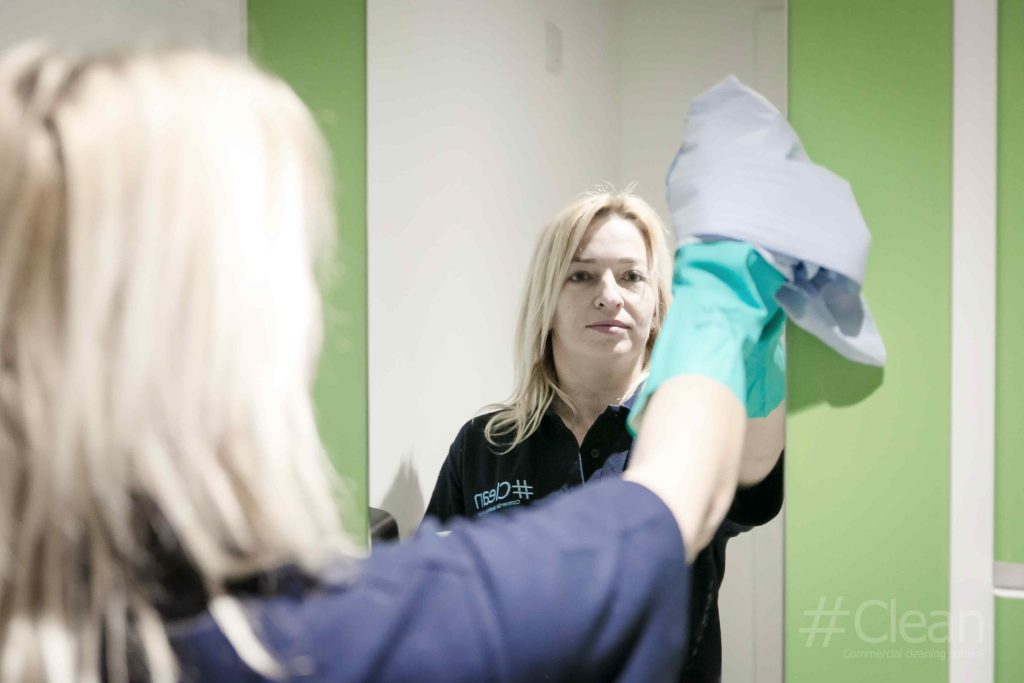
A huge variety of cleaning products are now available to help staff to maintain a hygienic office environment. Antiseptic wipes and hand-wash dispensers are easy ways of helping the drive to hygiene, but even more influential is the importance the organisation gives to the condition of the office. Staff need to know how high the standards are and be encouraged to wipe, wash and clean during the working day.
However, regular and thorough cleaning will still be essential. It’s a good job that there are options for all offices to benefit from the services of dedicated cleaning businesses like Hastag Clean. Simply contact us to see how easy it is to achieve a perfectly clean, hygienic office where staff can work in safety and comfort.
See more information about germs in the workplace here:
How to Keep Your Office Germ-Free
The 5 Most Germ-Filled Places in Your Office
The 10 things making you sick in the office
Your desk ‘harbours 400 times MORE germs than a toilet seat’