Back To Blog
Healthcare Cleaning
Dental Practice Cleaning Standards: 5 Essential Rules for Compliance
24 June 2026 Rickus.Jansen
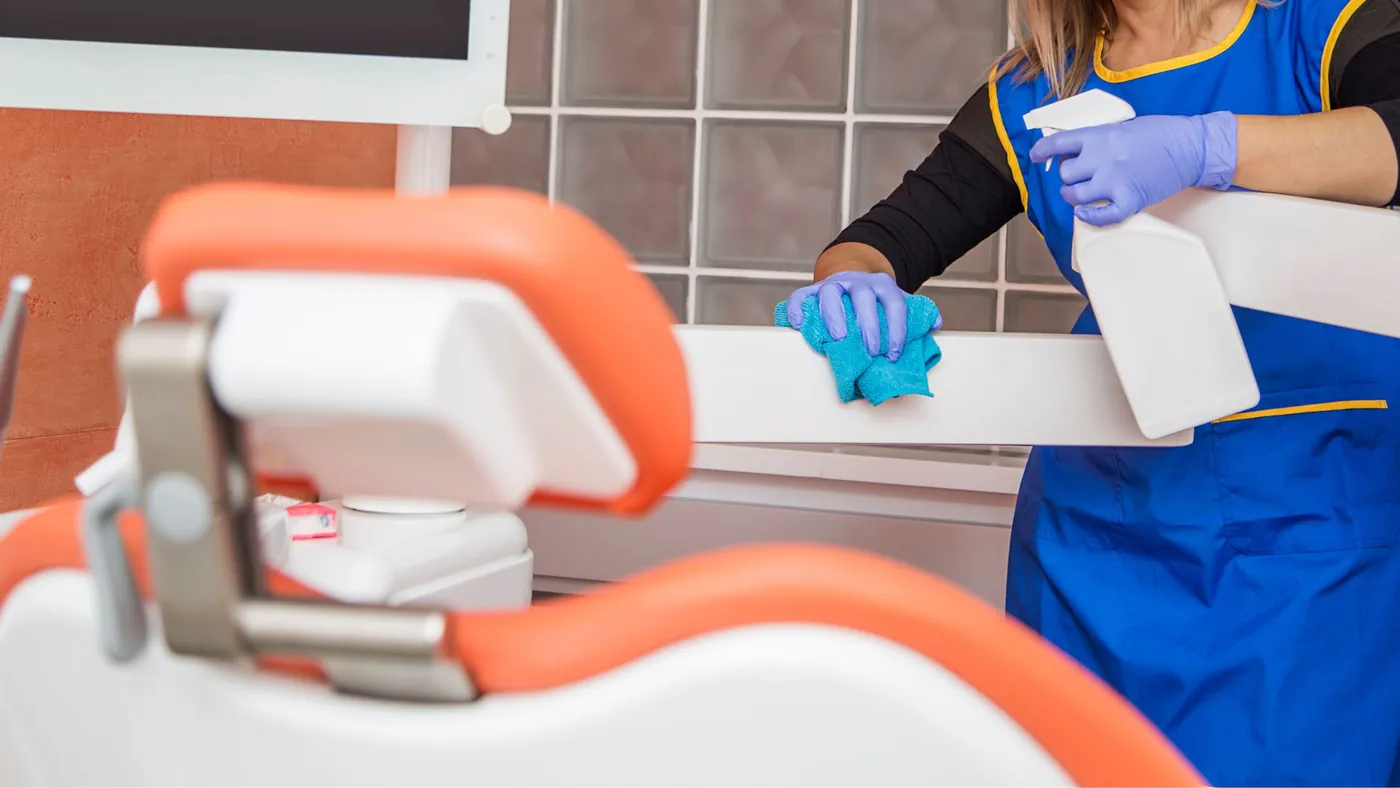
Dental practice cleaning standards in the UK are among the strictest in any commercial or clinical setting. The nature of dental treatment — close patient contact, exposure to blood and saliva, and the use of reusable instruments — means that cleaning is not simply about appearances. It is a direct patient safety requirement and a regulatory obligation.
Whether you run a small NHS surgery or a multi-chair private clinic, understanding exactly what those standards require is essential. This guide covers the 5 key areas every dental practice must get right, from CQC compliance to COSHH product management.
Why Dental Practice Cleaning Standards Are So Tightly Regulated
The risks of inadequate cleaning in a dental environment are significant. Cross-contamination between patients, the spread of blood-borne pathogens, and healthcare-associated infections (HCAIs) are all genuine concerns. That's why the regulatory framework around dental practice cleaning standards is both detailed and enforceable. Unlike general commercial environments, dental practices must demonstrate active compliance with specific guidance — and be ready to evidence that compliance during CQC inspections. The Care Quality Commission (CQC) requires all registered dental providers to demonstrate a safe, clean environment. Cleaning contractors engaged by practices must follow a documented schedule covering the frequency of cleaning for specific areas, fixtures, and high-touch items such as door handles, telephones, keyboards, and light switches.Rule 1 — Understand HTM 01-05 and What It Covers
The essential reference document for dental practice cleaning standards in primary care is Health Technical Memorandum 01-05 (HTM 01-05), published by NHS England. HTM 01-05 sets out the decontamination standards that practices must meet to protect patient safety, covering reusable instrument processing and environmental cleanliness. While HTM 01-05 focuses primarily on instrument decontamination, it sits alongside a broader requirement for the practice environment itself to be consistently clean and free from contamination risk. This is where your cleaning contractor plays a vital role.Rule 2 — Apply the Correct Cleaning Standards Across All Zones
Dental practices are divided into distinct zones, each with its own dental practice cleaning standards and requirements:- Clinical zones — The treatment chair area, adjacent surfaces, and any equipment in direct patient contact. These must be cleaned and disinfected between every patient, with a thorough clean at the start and end of each session.
- Decontamination room — A dedicated area for processing used instruments. This must be kept scrupulously clean and organised to eliminate any risk of cross-contamination between dirty and clean instruments.
- Reception and waiting areas — High-footfall zones requiring frequent attention. High-touch surfaces such as door handles, chairs, pens, and card readers must be regularly disinfected throughout the day.
- Staff areas and toilets — These must meet baseline hygiene standards, with additional attention to handwashing facilities and PPE availability.
Rule 3 — Use EN-Certified Products and Observe Dwell Times
Meeting dental practice cleaning standards means using the right products — not just any disinfectant. Products must be tested and certified to relevant European Standards (EN standards), confirming their efficacy against specific bacteria, viruses, and fungi under defined conditions. Dwell time — the length of time a disinfectant must remain on a surface to be effective — is a critical and frequently overlooked factor. Spraying a surface and immediately wiping it is not sufficient. Cleaning staff must be trained to observe the manufacturer's specified contact time before wiping. This single step is one of the most common points of failure in clinical cleaning.Rule 4 — Maintain COSHH Compliance for All Cleaning Products
Cleaning products used in dental surgeries fall under the Control of Substances Hazardous to Health (COSHH) Regulations. Any contractor responsible for cleaning must assess the products they use, ensure staff are trained in safe handling, and maintain proper documentation. The HSE's COSHH guidance requires employers — including cleaning contractors — to identify harmful substances, assess exposure risks, and implement appropriate controls. For a dental practice, this means working with a cleaning company that truly understands clinical environments, not just general commercial premises. Our healthcare cleaning services are specifically designed to meet dental practice cleaning standards across Surrey, Sussex, and Kent.Rule 5 — Document Everything for CQC Inspections
CQC inspectors will want to see evidence that your dental practice cleaning standards are being met consistently — not just on the day of the visit. This means keeping cleaning logs, product data sheets, staff training records, and a written cleaning specification that maps tasks to zones, frequencies, and responsible parties. A professional cleaning contractor should provide all of this documentation as a matter of course. If yours doesn't, that's worth addressing before your next inspection. We also work with practices requiring additional services — such as our specialist cleaning for deep cleans, post-refurbishment cleans, or one-off remediation work.How Hashtag Clean Supports Dental Practices
Hashtag Clean's healthcare cleaning team understands the regulatory environment that dental practices operate in. Our approach to dental practice cleaning standards includes:- Documented cleaning schedules aligned with CQC and HTM 01-05 expectations
- Use of EN-certified disinfectants with correct dwell times observed
- Colour-coded cleaning equipment to prevent cross-contamination between zones
- COSHH-compliant product management and full staff training records
- Flexible scheduling to work around patient appointments and surgery hours