How to Clean an Office: Step-by-Step Guide
Cleaning an office properly is not just about wiping surfaces. Working in the right order, using the right equipment and covering the areas people forget is what separates a quick tidy from a genuinely clean workplace.
This step-by-step guide explains how to clean an office, whether you are organising it yourself or checking what a cleaning provider should be doing.
Before you start: equipment and safety
- Cloths: microfibre cloths in different colours, so kitchen, washroom and general areas each have their own.
- Products: a general surface cleaner, a disinfectant, glass cleaner and a suitable floor cleaner.
- Equipment: vacuum cleaner, mop and bucket, bin liners and a duster for high-level areas.
- Safety: gloves, and the safety data sheet for every chemical you use. Cleaning chemicals fall under COSHH, so store them safely and never mix products.
The golden rules: top to bottom, clean to dirty
Always work from high to low, so dust and debris fall onto areas you have not cleaned yet. And work from cleaner areas to dirtier ones, finishing with washrooms, so you do not carry germs from toilets into offices or kitchens.
Step 1: Empty bins and clear rubbish
Start by emptying all bins and recycling, replacing liners and removing any rubbish. It clears the space and stops you working around clutter.
Step 2: Dust high-level areas
Dust the tops of cupboards, shelves, window ledges, picture frames and light fittings. Doing this first means any dust that falls will be picked up when you clean the floors.
Step 3: Clean desks and touchpoints
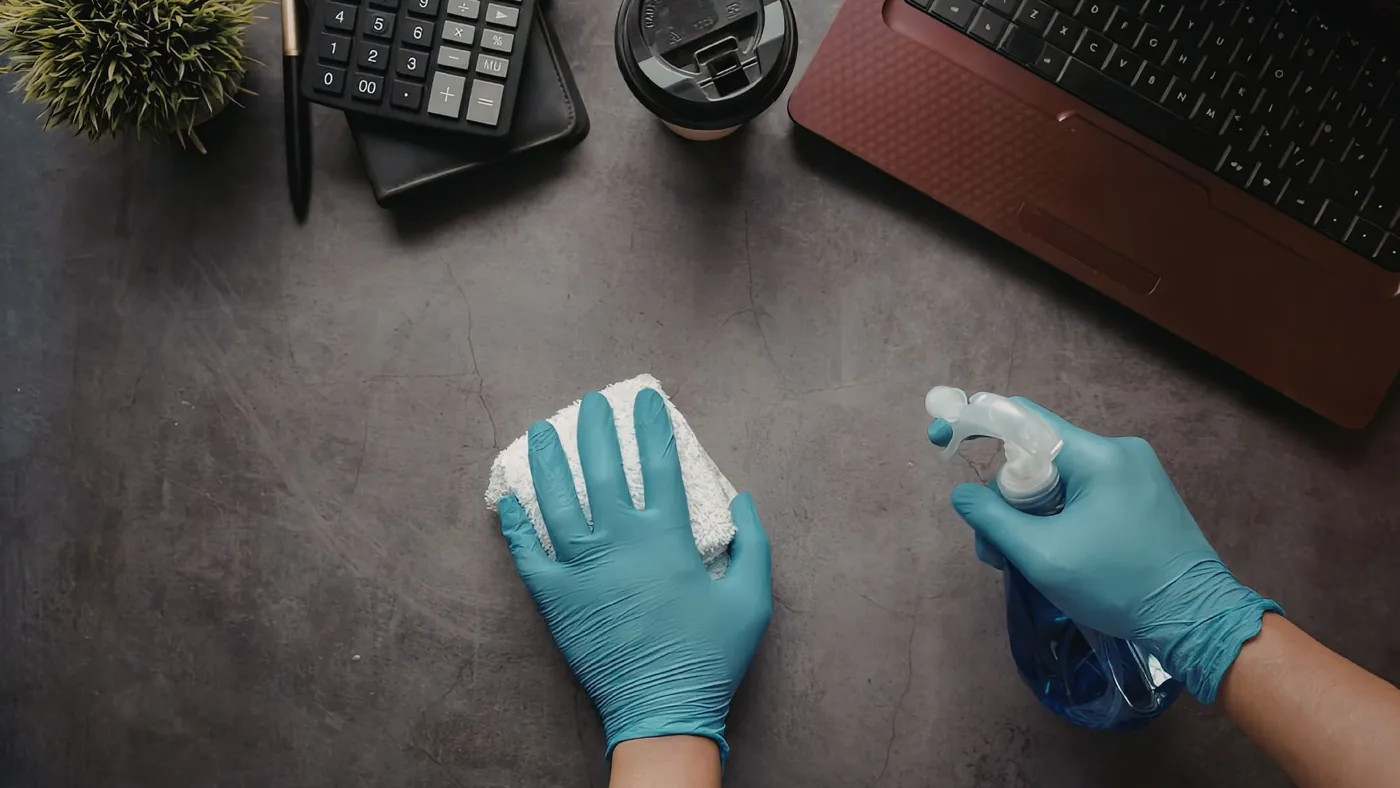
Wipe cleared desk surfaces, then clean high-touch points: door handles, light switches, phones, keyboards, shared printers and lift buttons. These are the surfaces that spread germs fastest.
Step 4: Clean the kitchen and breakout areas
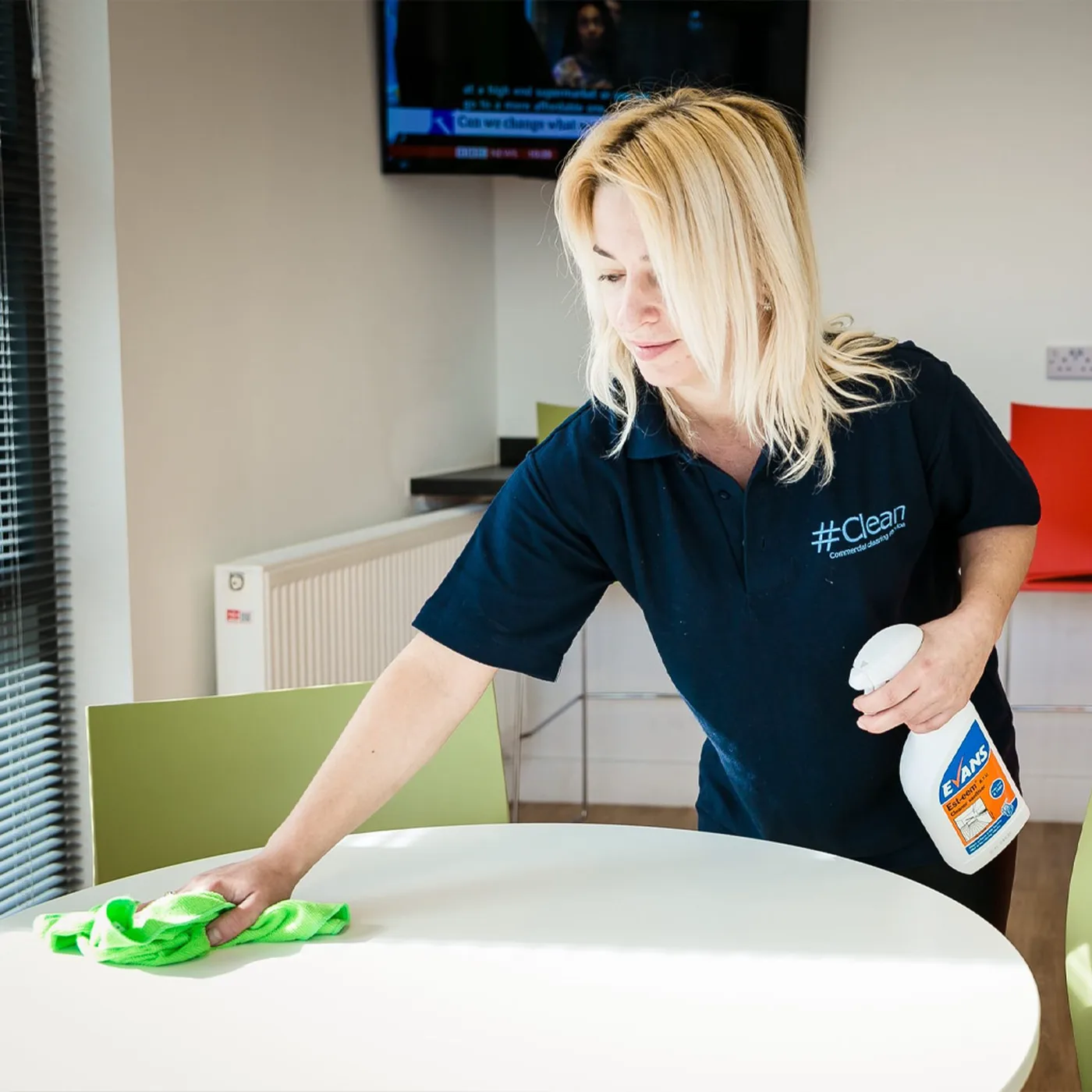
Clean worktops, sinks, appliance handles, tables and chairs. Wipe the microwave and fridge handles, and restock soap and paper towels.
Step 5: Clean the washrooms
Use separate cloths and equipment. Clean toilets, urinals, sinks, taps, mirrors and dispensers, then restock toilet roll, soap and hand towels. Disinfect after cleaning.
Step 6: Clean the floors last
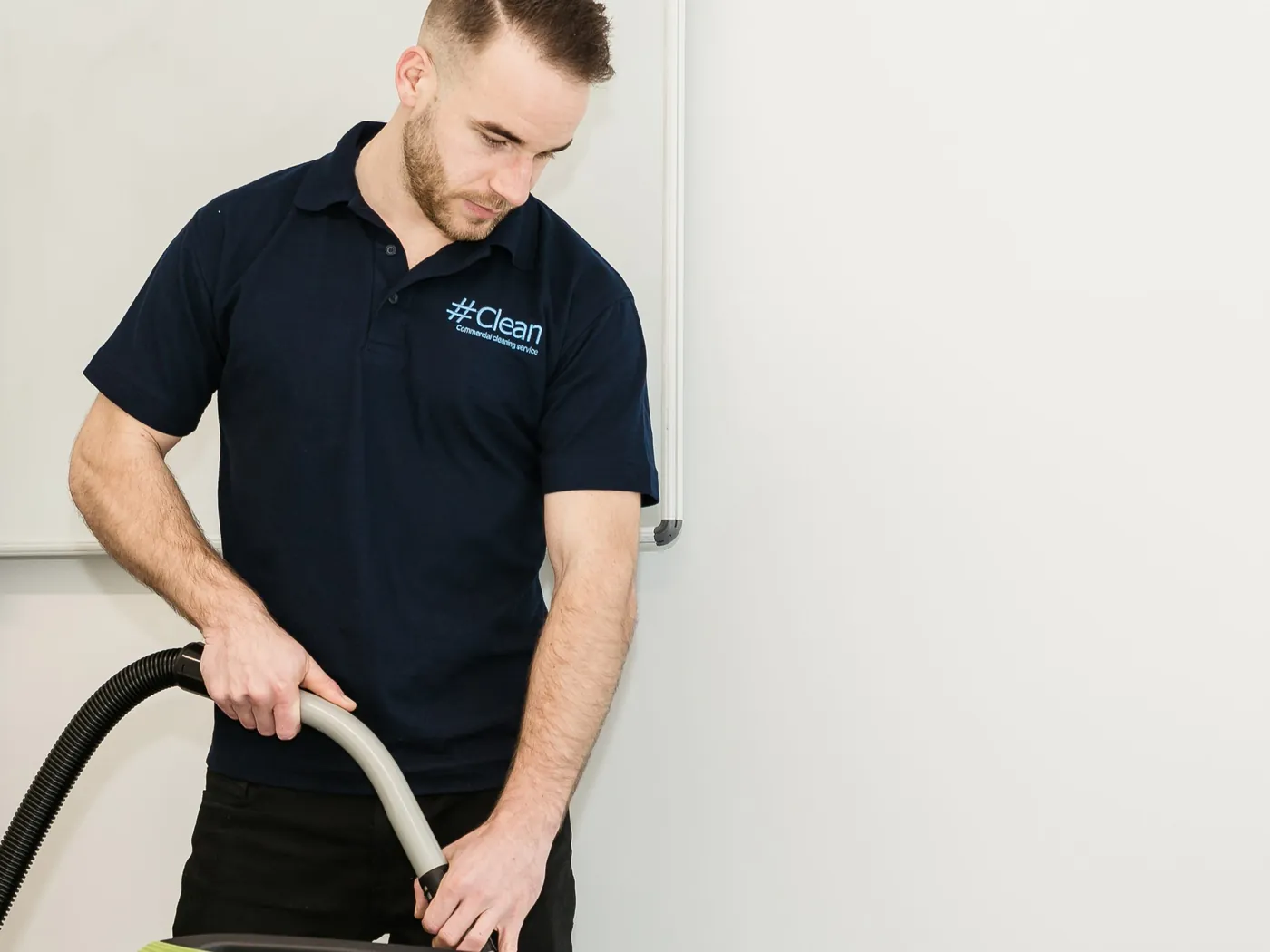
Vacuum carpets and hard floors, then mop hard floors, working from the far side of each room towards the door. Put out a wet floor sign where needed.
Step 7: Check and restock
Walk round once more. Check for missed spots, make sure consumables are full, and note anything that needs attention, such as a stained carpet or a broken dispenser.
Areas that are most often missed
- Skirting boards and the bases of chairs
- Light switches and door push plates
- Telephone handsets and shared headsets
- Under desks and behind doors
- Kitchen cupboard handles and the inside of the microwave
How often should an office be cleaned?
That depends on how many people use the space, what the space is used for, and how many visitors you have. Our guide to choosing the right cleaning frequency for your business walks through the options.
Doing it yourself vs using a professional cleaner
Small offices sometimes manage cleaning in-house, but it quickly takes time away from real work, and standards tend to slip. A professional cleaner brings trained staff, the right equipment and a consistent routine. If you are comparing providers, read 4 ways to choose a professional commercial cleaner and what to look for in an office cleaning contract. Once a contract is running, our guide on how to audit your office cleaner helps you check standards are being met.
How Hashtag Clean can help
Hashtag Clean provides office cleaning across Surrey, Sussex and Kent. Our directly employed cleaners work to a bespoke, site-specific checklist on every visit, with an account manager as your single point of contact.
Request a quote for a cleaning plan built around your office.